Care for the thoughts and fears that take over your day.
Intrusive thoughts, constant worry, or trauma-related symptoms can shape your days in ways others may not see. We review your history and current care, then explain which options may help and what the evidence does and doesn’t show.
Anxiety can shape more of life than others see.
OCD, anxiety, and PTSD can look very different, but they often share a sense of being stuck in patterns you didn’t choose. You may have tried therapy, medication, or both and still find that symptoms take up too much of your day. Wherever you are, care should start with what you are living with now.
Intrusive thoughts
Unwanted thoughts, urges, or checking rituals can take up hours and feel impossible to switch off.
Constant worry
Persistent worry, tension, or panic can make ordinary situations feel overwhelming or hard to face.
Trauma and triggers
Flashbacks, nightmares, or feeling on edge after trauma can make it hard to feel safe and settled.
Sleep and daily life
Poor sleep, avoidance, and exhaustion can shrink your routines, work, and time with the people you love.
Symptoms that haven’t eased with treatment are real, and you still have options.
Therapy and medication help many people, but not everyone gets enough relief. Newer approaches, such as rTMS, may add to the care you already have. We’ll explain what the evidence does and doesn’t show, and be honest about what we think is possible.
A plan built around you.
OCD, anxiety, and PTSD respond best to care that fits the person, not only the diagnosis. We review your symptoms, past treatment, sleep, and overall health, and work alongside your therapist or psychiatrist, so any new treatment builds on the care you already have.
Review your history
We go through your symptoms, the therapy and medications you’ve tried, and how each has worked for you.
Discuss your options
We explain which approaches may fit, what they involve, and what the evidence does and doesn’t show.
Track how you respond
We measure your symptoms at regular points and adjust the plan with you and your care team.
Therapies we may combine in your plan.
These conditions affect each person differently, so we match treatment to your history. Depending on your assessment, your plan may include one or both of these. Some of these uses are off-label. We’ll explain the evidence, and what isn’t known, before you decide.
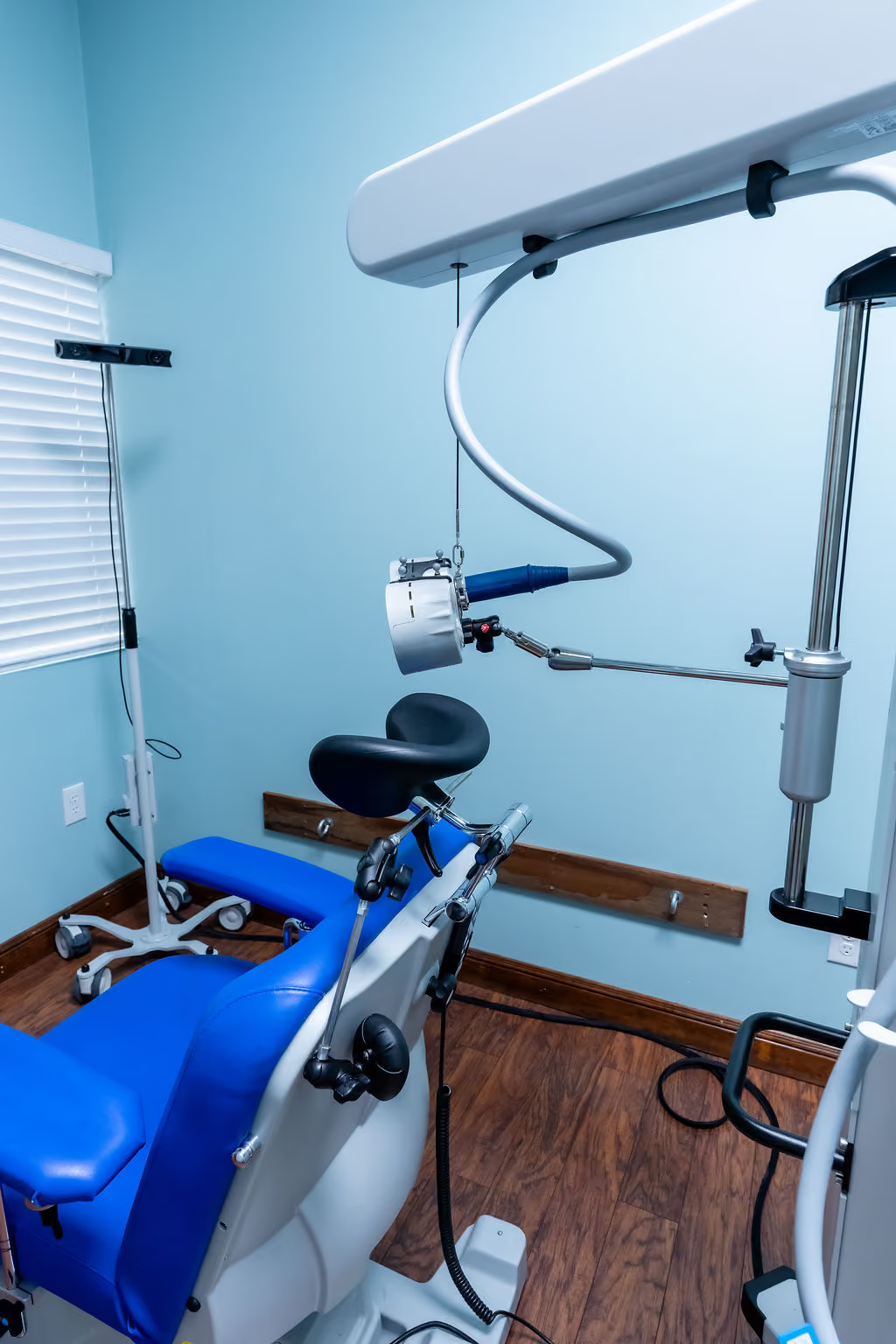

An honest look at fit and expectations.
You may be a good fit if
- You have been diagnosed with OCD, an anxiety disorder, or PTSD
- Therapy and medication haven’t given you enough relief
- Symptoms take up hours of your day or limit your life
- You can attend regular sessions over several weeks
- You have no metal implants in your head and no history of seizures
- You are looking for next steps for someone you care for
What to realistically expect
- Improvement usually builds gradually over several weeks
- Not everyone responds, and we will tell you plainly
- We encourage you to continue therapy during treatment
- Keep taking your medication unless your prescriber says otherwise
- We measure your symptoms so you can see what is changing
- We work alongside your therapist and prescribing doctor
Common questions about OCD, anxiety, and PTSD care.
Is rTMS approved for OCD, anxiety, and PTSD?
rTMS is FDA-cleared for OCD and depression. Its use for PTSD and generalized anxiety is off-label, which means the evidence is still developing. We explain what is known for your condition before you decide.
Should I keep seeing my therapist?
Yes. Treatments like rTMS are designed to add to therapy, not replace it. With your permission, we share findings and progress with your therapist and psychiatrist so your care stays connected.
Is treatment covered by insurance?
Coverage depends on your plan and diagnosis. Some plans cover rTMS for OCD with prior authorization, while treatment for PTSD or anxiety is often private pay. We check your benefits and review any costs with you before treatment begins.
Do I need to stop my medication?
Usually not. Many people continue their current medication during treatment. Any change to your medication is a decision for you and your prescriber, and we coordinate with them throughout.
Can a family member come to appointments?
Yes. Family members and friends can offer support and help us understand how you have been doing. You are welcome to bring anyone who helps you day to day.
What if I’m in crisis?
NeuroBridge is not an emergency service. If you are thinking about suicide or are in crisis, call or text 988 to reach the Suicide & Crisis Lifeline, or call 911. Help is available 24 hours a day.