Living well with Parkinson’s, with care that adapts to you.
Parkinson’s can change how you move, balance, speak, and think, and those changes shift over time. We work alongside your neurologist on a plan that complements your current treatment and supports your everyday goals.
Parkinson’s can affect more than movement.
Parkinson’s shows up differently from one person to the next, and from one year to the next. You may be noticing changes in how you walk, speak, sleep, or think, or finding that medication doesn’t cover every part of your day. Whether you were diagnosed recently or years ago, care should fit where you are now.
Movement and balance
Slowness, stiffness, tremor, shuffling steps, or freezing can make walking and everyday tasks less predictable.
Speech and expression
A softer voice, less facial expression, or changes in swallowing can affect conversation, meals, and confidence.
Thinking and mood
Slower thinking, trouble with planning, low mood, or anxiety are common and can be as hard as the physical changes.
Sleep and energy
Disrupted sleep, fatigue, and medication that wears off between doses can shape how much you can do each day.
Medication matters, but it isn’t the only thing that can help you stay active.
Parkinson’s medication is essential for many people, but it doesn’t address every symptom. Focused exercise, rehabilitation, and supportive therapies can work alongside it, and we’ll be honest with you about what we think is possible.
A plan built around you.
Parkinson’s changes over time, so your plan should too. We look at your movement, balance, speech, thinking, mood, and sleep, and at how your medication fits into your day, then coordinate with your neurologist so our care complements what they prescribe.
Understand where you are
We review your diagnosis, symptoms, medications, daily routines, and what you most want to protect.
Build on your current care
Your plan adds focused therapies and exercise alongside your medication, never in place of it.
Adjust as things change
We reassess regularly and update the plan with you and your neurologist as your needs evolve.
Therapies we may combine in your plan.
Parkinson’s affects each person differently, so we don’t lead with a single therapy. Depending on your assessment, your plan may draw on one or more of these. Some of these uses are off-label. We’ll explain the evidence, and what isn’t known, before you decide.
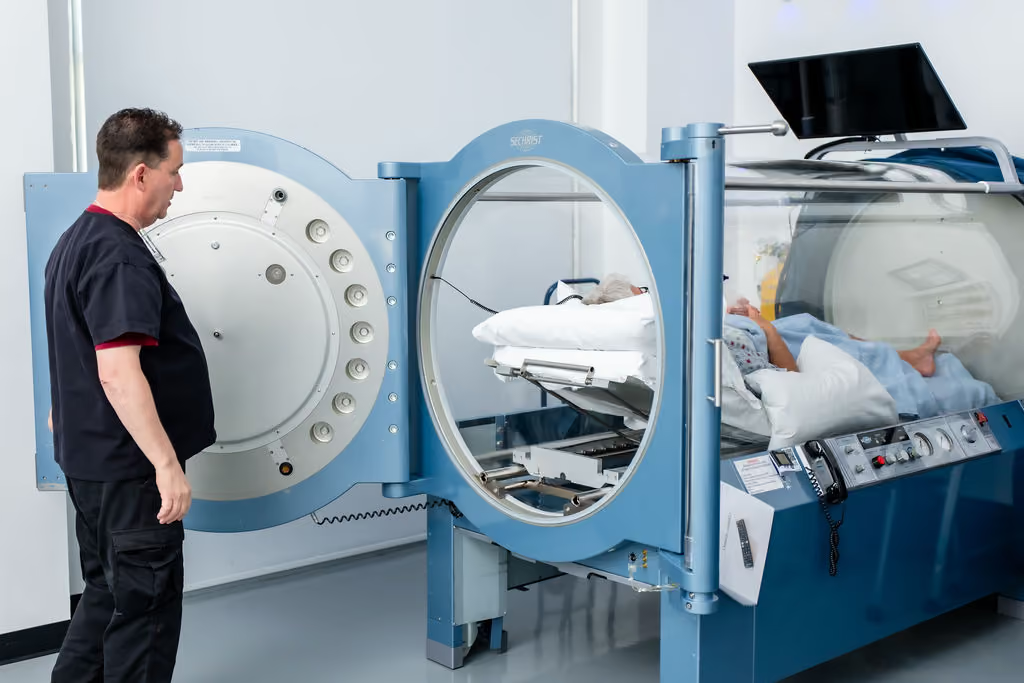
Hyperbaric Oxygen Therapy (HBOT)
Breathing oxygen under pressure raises the oxygen in your blood, and may be used to support energy and brain function.
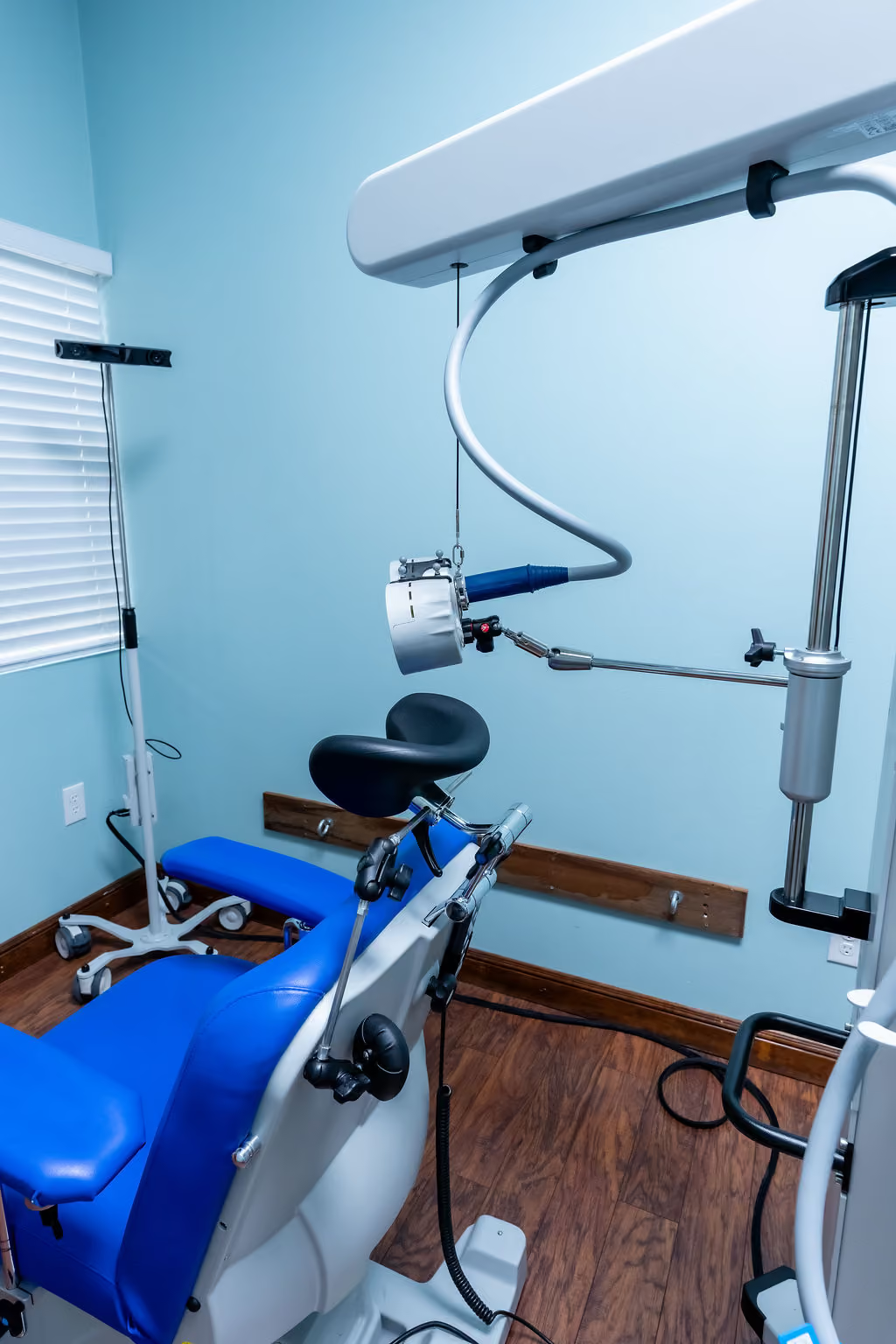
Transcranial Magnetic Stimulation (rTMS)
Focused pulses stimulate targeted brain areas and may be used alongside rehab to support movement, mood, or thinking.
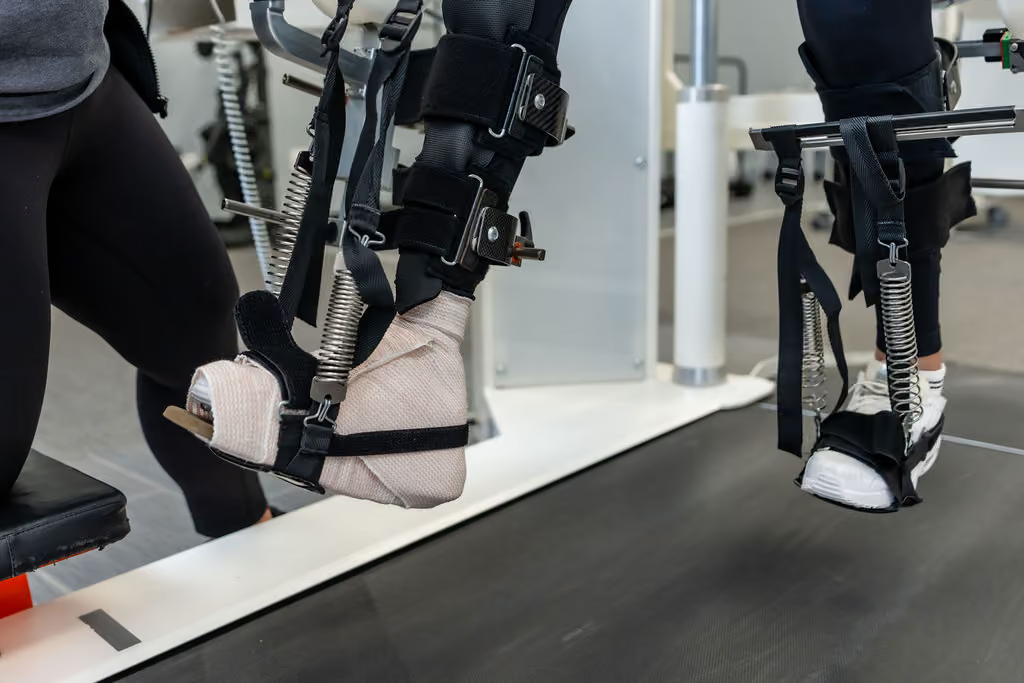
Movement Science & Rehabilitation
Exercise-based programs for walking, balance, posture, and strength, built to keep you active and confident.

Metabolic Optimization
Labs, nutrition, sleep, and other health factors that can influence your energy and how you respond to treatment.
An honest look at fit and expectations.
You may be a good fit if
- You have a Parkinson’s diagnosis from your neurologist
- Movement, balance, or speech changes affect your day
- Medication helps, but it doesn’t cover every symptom
- You want to stay active and independent for longer
- You can commit to a structured plan with regular visits
- You are looking for next steps for someone you care for
What to realistically expect
- Parkinson’s is progressive, and our care does not cure it
- Goals focus on function, comfort, and independence
- Plans work best with consistent visits and practice at home
- We measure your progress so you can see what is changing
- We tell you plainly if something is not helping
- Medication decisions stay with your neurologist
Common questions about Parkinson’s care.
Will this replace my Parkinson’s medication?
No. Our care is designed to work alongside the treatment your neurologist prescribes. Any change to your medication is a decision for you and your neurologist, and we share our findings to help inform it.
Is it worth starting if I was diagnosed years ago?
It can be. People come to us at many stages of Parkinson’s. Your assessment helps us understand what is affecting you most now and which goals are realistic to work toward, whether that is walking, balance, or daily tasks.
Will you work with my neurologist?
Yes. With your permission, we share findings and progress updates with your neurologist, primary care physician, and therapists. The goal is care that builds on what you have already done, not care that starts over.
Is Parkinson’s care covered by insurance?
Coverage depends on your plan and on which services are part of your care. Some therapies are often covered, while others may not be. We review your options and costs with you before treatment begins, so you can decide with the numbers in front of you.
Can a family member come to appointments?
Yes, and we encourage it. Family members and care partners often notice changes first and play a big part in practice at home. You are welcome to bring anyone who helps with your day-to-day care.